Easy Way to Find Shines in Zelda
Shrine design in Zelda: Breath of the Wild
I recently started playing The Legend of Zelda: Breath of the Wild and it has been very difficult to put the game down. One of the reasons are the shrines in the world of Hyrule. The concept of shrines is one of the cleverest gameplay pockets I have come across in recent times. This is because of its game design functions, visual language, and how it ties with the overall world design.
Self-contained pockets of gameplay
So, what are shrines? Shrines are small dungeons scattered across the world as individual pockets of gameplay. They are not dependent on Link (the protagonist) doing anything in the outside world. Everything needed to complete the shrine is housed within the shrine itself, including puzzles and combat.

Now let's take a look at the shrine elements one by one, starting from when the player discovers them.
Strong Skin
To me, the skin of the shrine is ingenious. By skin, I mean the explanation of how the shrine fits in the world design. It is an underground temple set up by a technologically advanced ancient civilization. The reason why this is great is because it allows the shrines to be placed almost anywhere on the Hylian landscape, regardless of the world outside it. A shrine could be placed in a valley, on a plateau, on a river bank, near a bridge and even near a castle. This allows the designers to spread them judiciously around the world; which affects pacing and progression; with ease.
External Visual Language
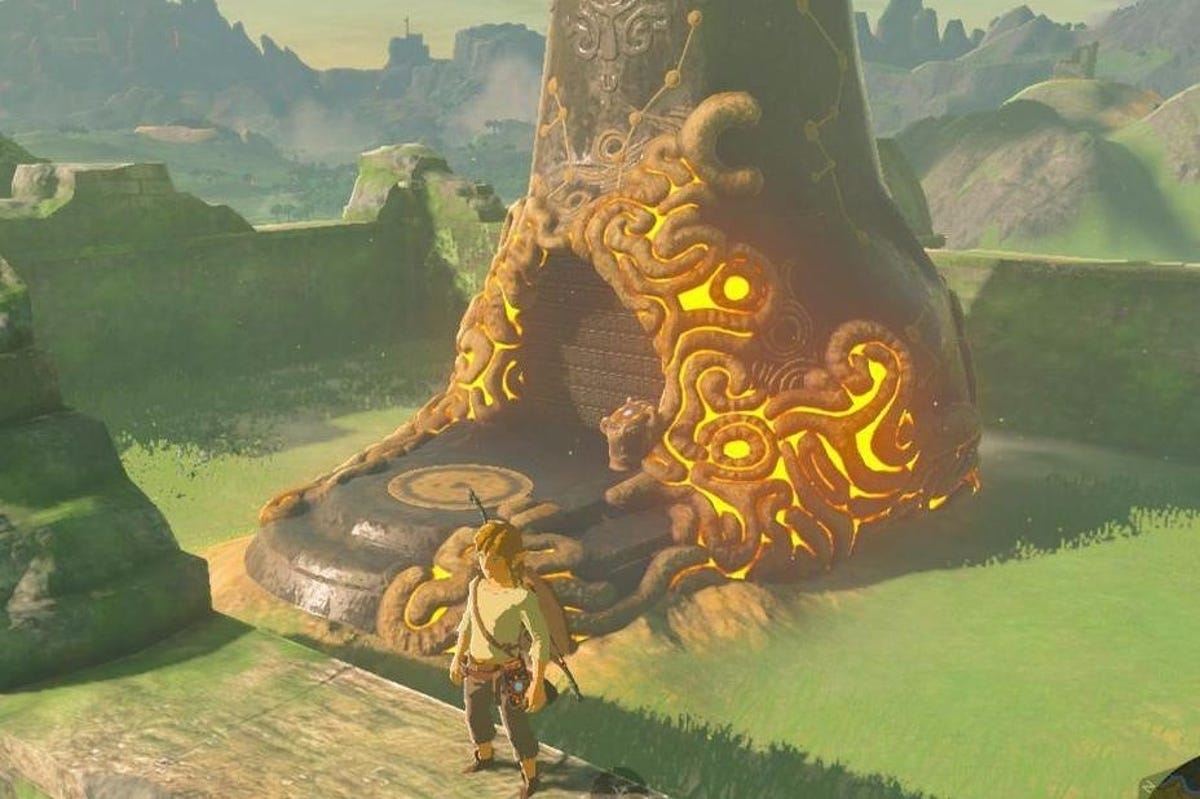
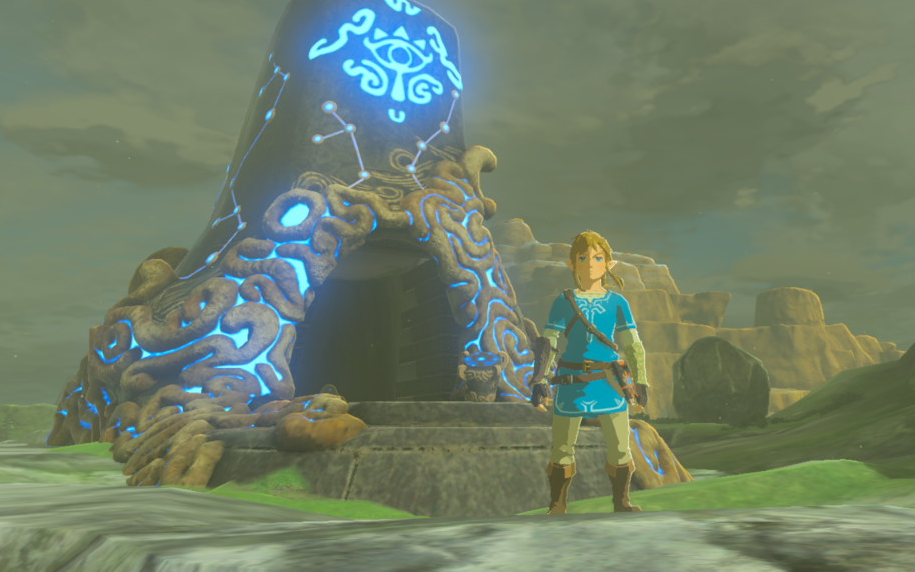
The shape design and the emissive colors contribute highly to the external visual language of the shrines which make it incredibly easy to spot them from a distance. The emissive colors not only highlight the shrine, but convey the state of the shrine to the player as well. There are three states to a shrine - Not discovered , Discovered but not completed and Discovered and completed . The shrine state can be identified by a set of emissive colors on it exterior. A completely yellow exterior conveys a shrine that has not yet been discovered. A shrine with yellow and blue exterior signifies a Discovered but not completed state whereas a completely blue exterior means that the shrine has been discovered and beaten.

Trial names
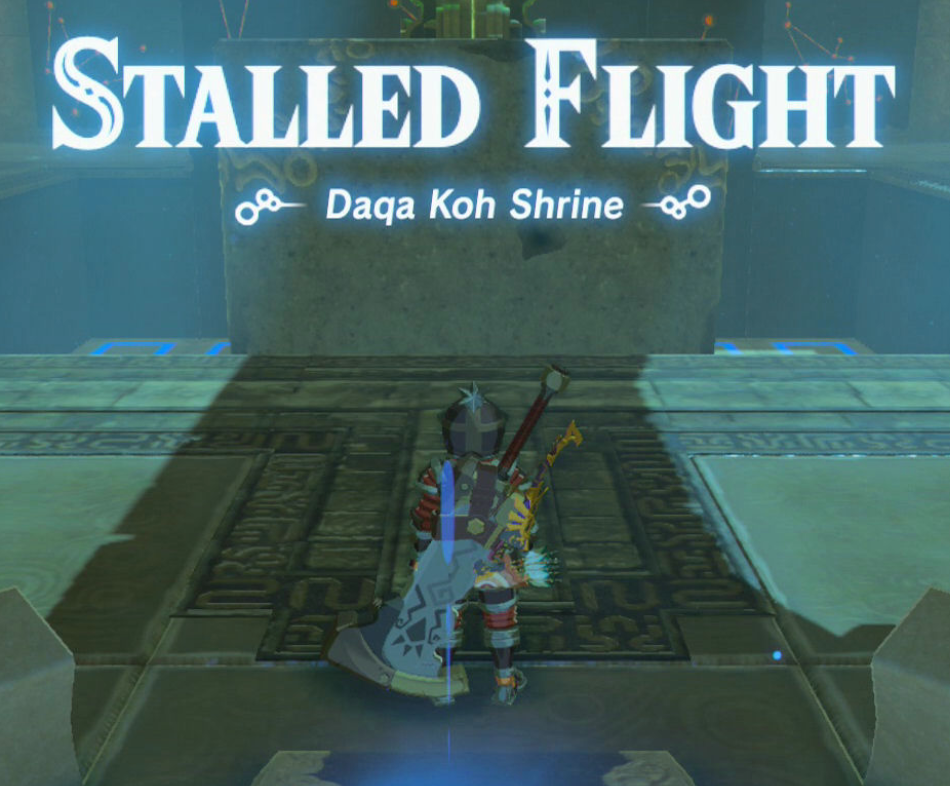
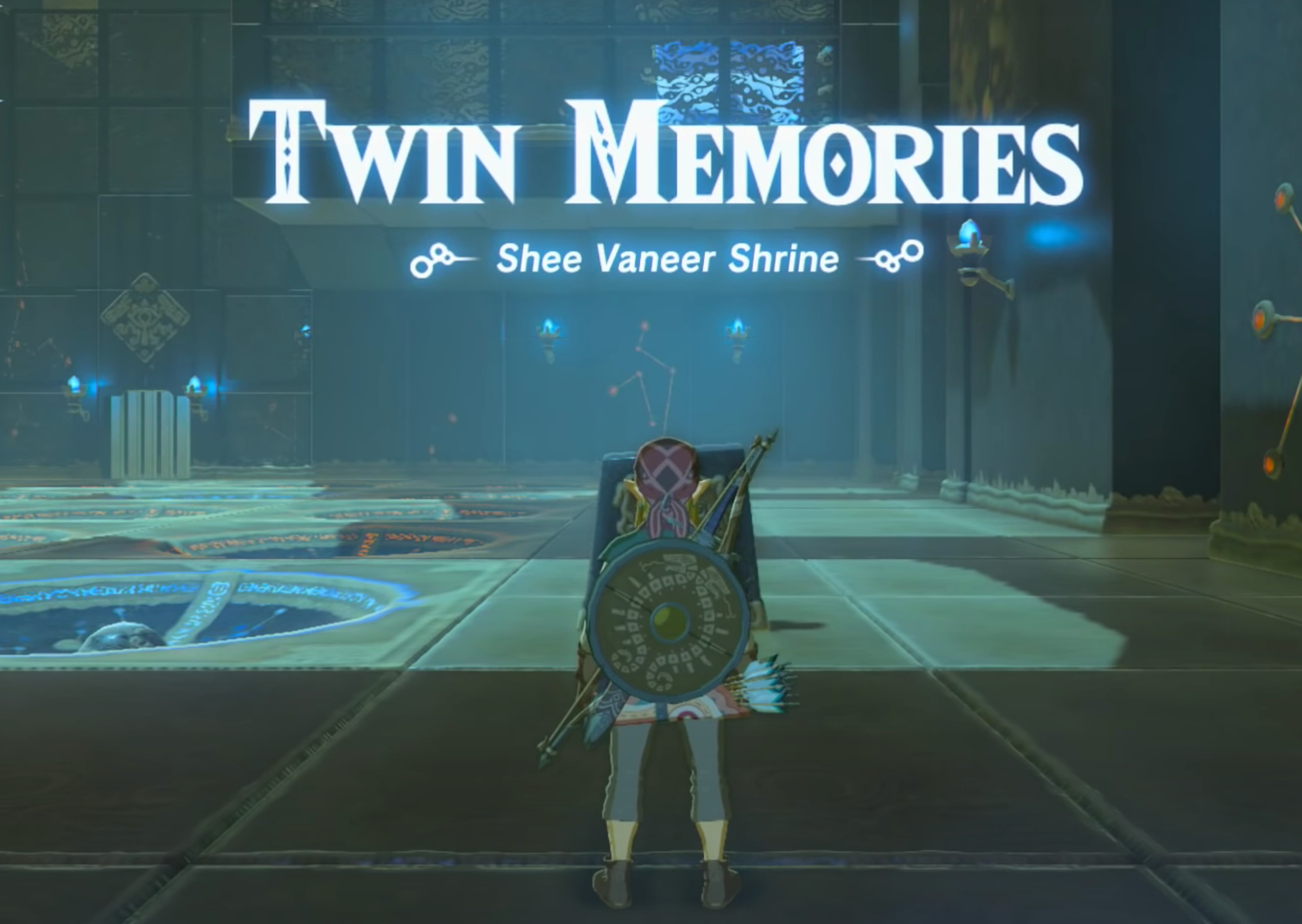
As soon as Link enters the shrine, the player is presented with the Shrine name as well as the trial name. Combat trial names are pretty straightforward and hint at the difficulty of the enemy in the shrine. Puzzle trial names are designed to hint at the solution subtly.
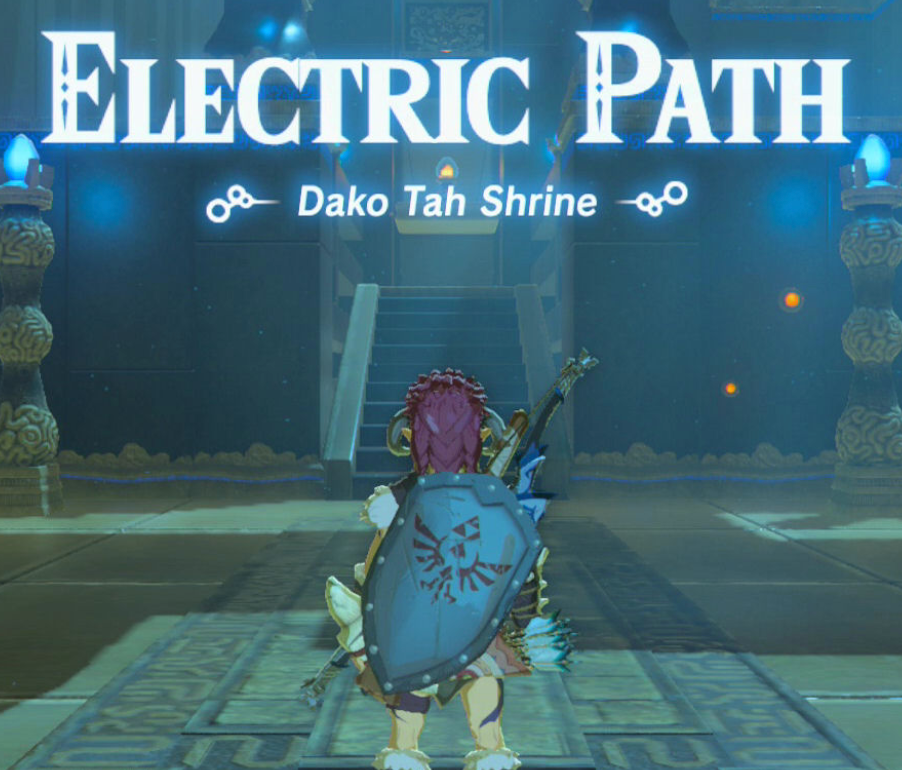
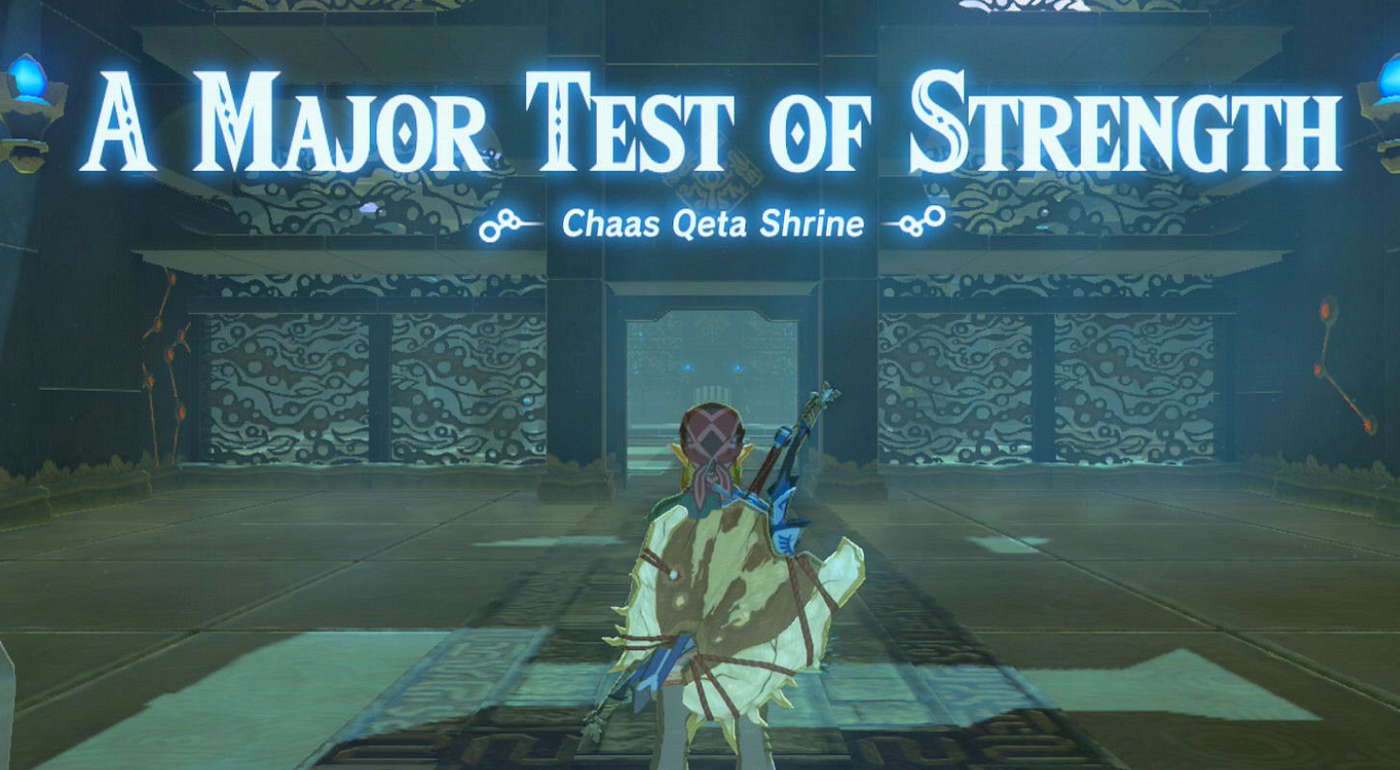
Architectural Design
After this, we notice that all the environment design inside is entirely architectural. This contrasts with the more organic environment that dominates Hyrule. By spreading these shrines around the world, the artists and designers managed to achieve a nice blend of man-made and organic art.
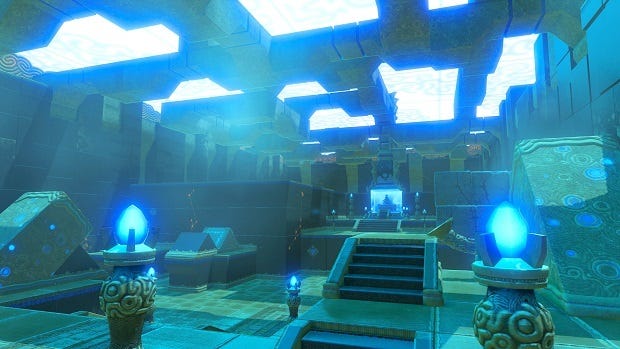
Apart from this, the environment art inside, tends to reaffirm the magical layer of the world with detailed decorations like crystals and constellations, depicting the ancient civilization's thinking and the significance of these shrines in their culture.
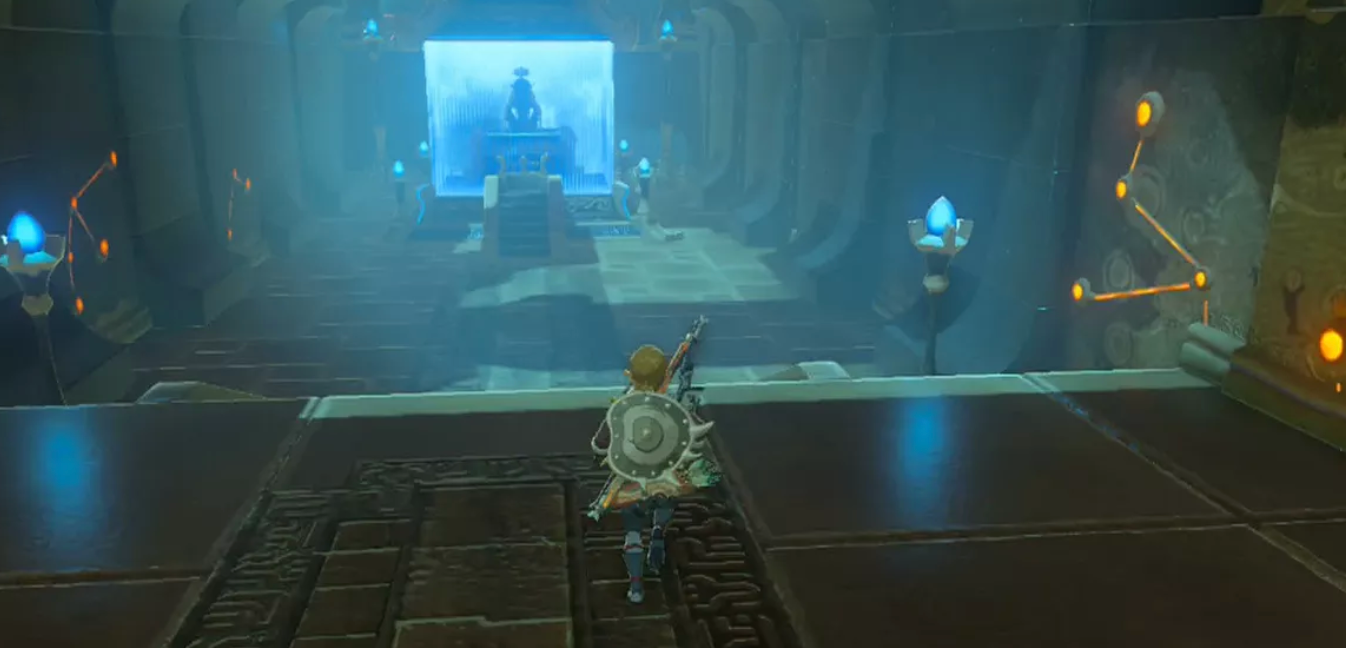
It is interesting to note that even though the inside of the shrine is rather architectural, the outside is constructed from more circular and organic shapes to blend it better with the organic landscape around it. The glow on the walls outside the shrine and on the walls inside the shrine bind the design of the exterior and the interior structure quite well.
Game Design
Now we can take a look at the game design elements and function of the shrine, including but not limited to player progression, puzzle design and tutorialization.
Puzzle Design
Shrines are no exception to Nintendo's mantra of design — introduce, reinforce and finish with a twist. The dungeon itself is made up of multiple puzzles that revolve around the same concept (that the name hints at) and difficulty increases with each puzzle. First puzzle introduces the concept, second puzzle reinforces it with a harder challenge and the third and final puzzle puts a twist on the concept to wrap up the dungeon.
Short Gameplay Length
Even though there are multiple puzzles and combat situations in a shrine, the gameplay length does not usually exceed seven minutes. This makes sure that the design is tight and there is no room for unnecessary things in the shrine. Short play times also makes sure that the player is not frustrated when they are stuck on a particular shrine. They can easily move on to the next shrine and finish it to gain a similar spirit orb.
Player Progression
Shrines are the most significant way for the player to "level up" in the game. I used quotes because there isn't a typical numbered level system in Zelda like most RPGs. Breath of the Wild defines a pseudo player level as a combination of number of hearts and the maximum amount of stamina that Link carries. Upon completion of each shrine, Link gains a spirit orb as a reward. When four of these are collected, Link can exchange them for increasing either his maximum number of hearts or his maximum stamina.
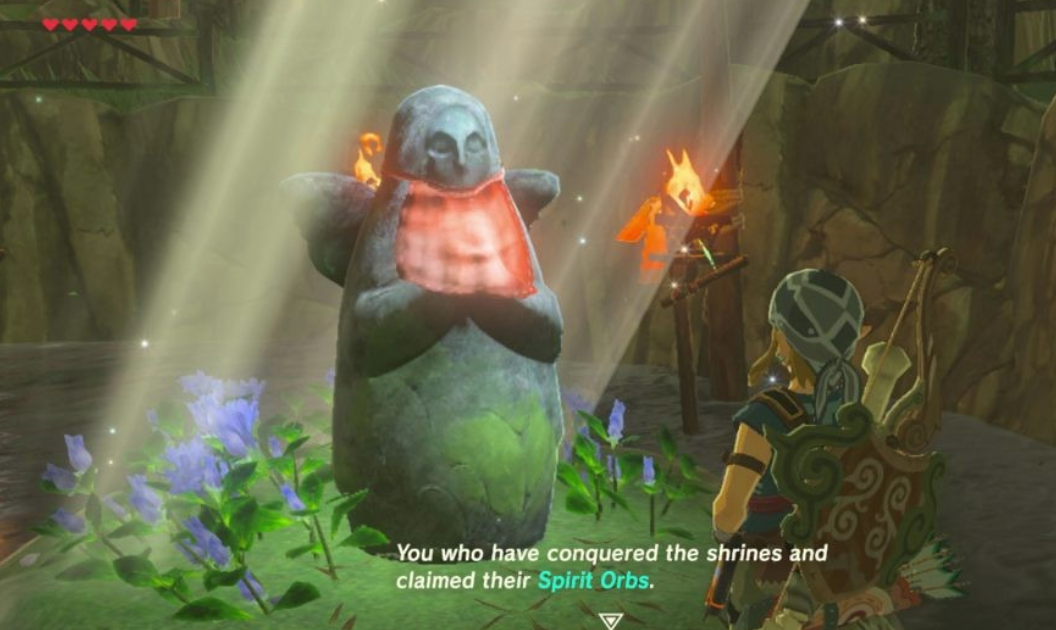
It is interesting to note that the shrines can be completed in any order, which gives the player the freedom of leveling up and tackling the challenges in any order they want. This contributes to the true feeling of freedom that the game wants the player to experience.
Tutorialization
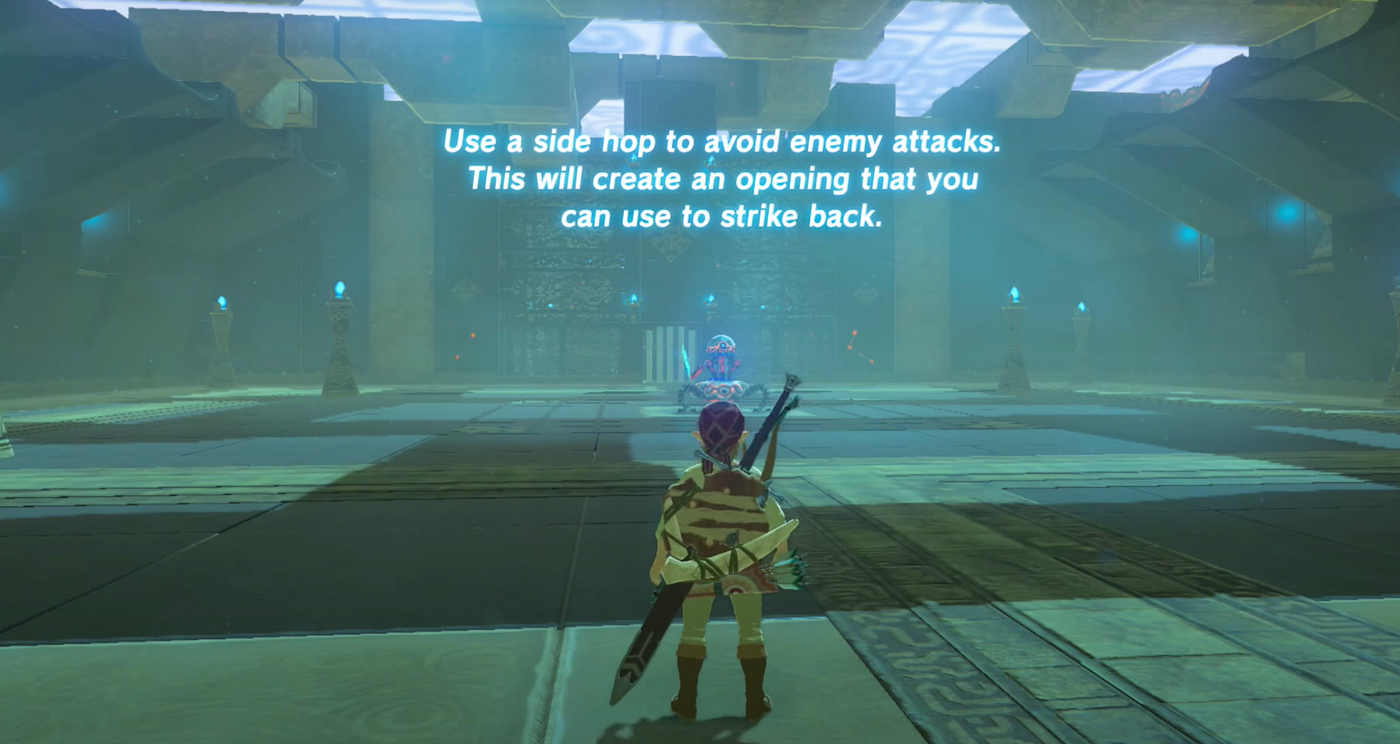
Shrines are also used to teach new mechanics and combat tips to the player. The tests of strength, teach the player how to fight while presenting them with formidable opponents to test your strength.
A good example of "new mechanic" shrines are the first shrines on the great plateau where the player is introduced to runes that they use throughout the game to navigate the world.
Reward Expectations
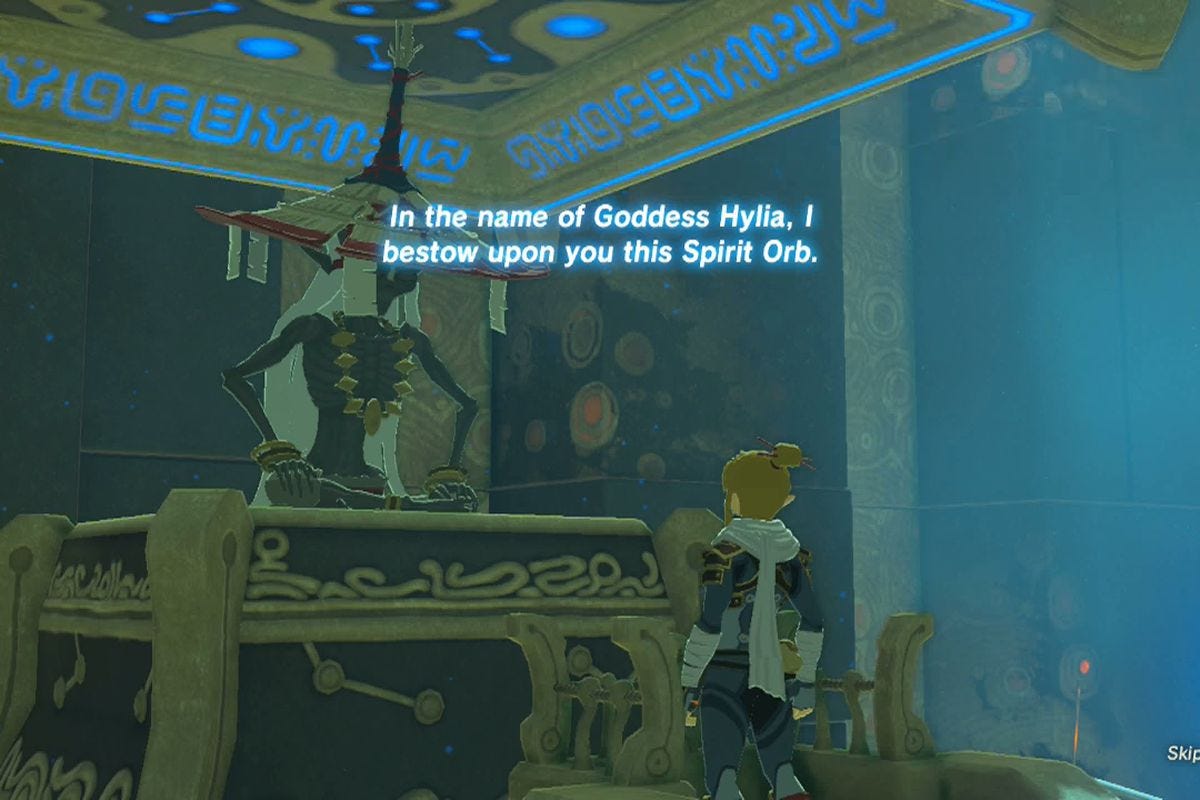
Rewards are incredibly important for any gameplay pocket, small or big. Same goes for shrines. After beating a few shrines, it becomes very apparent to the player, what they will receive for beating the shrine. The major reward at the end is definitely the spirit orb that the monk passes on to Link. Additionally, for most of the shrines, there is one and only one hidden treasure chest. To reach the hidden chest the player usually needs to solve another traversal puzzle based on the shrine trial's concept.
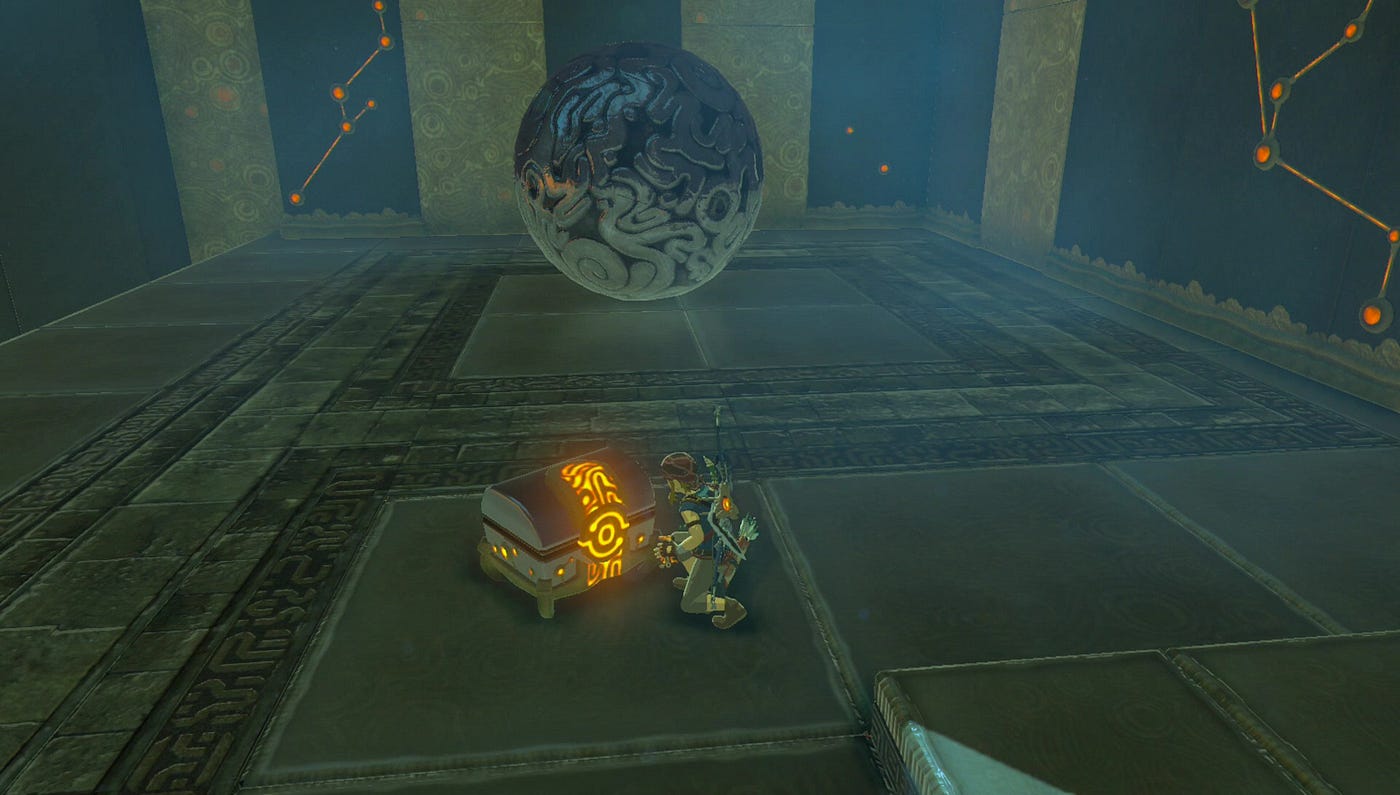
There are other treasure chests in the shrine sometimes, though they mainly contain items needed to beat the shrine. For example: a weapon to aid in the combat ahead. Additional treasure chests can also be used as breadcrumbs to guide the players in multi-room puzzle solving.
It is worthy to note how the world map conveys if the hidden treasure chest has been obtained for a particular shrine or not. A chest symbol next to the shrine name means that the chest has already been obtained.

Fast Travel Points
Breath of the Wild cleverly uses different types of locations as fast travel points. This saves the giant open world from over-cluttering of the same type of fast travel structures. The interesting thing is that the player does not need to beat the shrine to be able to use it for fast travel. Just discovering the shrine makes it a possible fast travel point.
These self-contained areas of gameplay can easily be spotted from a distance because of its excellent visual language. They make exploration accessible by acting as fast travel points. Not only are they filled with short puzzles and combat challenges, they are also the major propagators of player progression and new mechanics while making sure the player's reward expectations are set. All in all, an absolutely clever design framework allows for gameplay versatility and player engagement in such small gameplay pockets.
Source: https://uxdesign.cc/shrine-design-in-zelda-breath-of-the-wild-f3b1093469cf
ارسال یک نظر for "Easy Way to Find Shines in Zelda"